
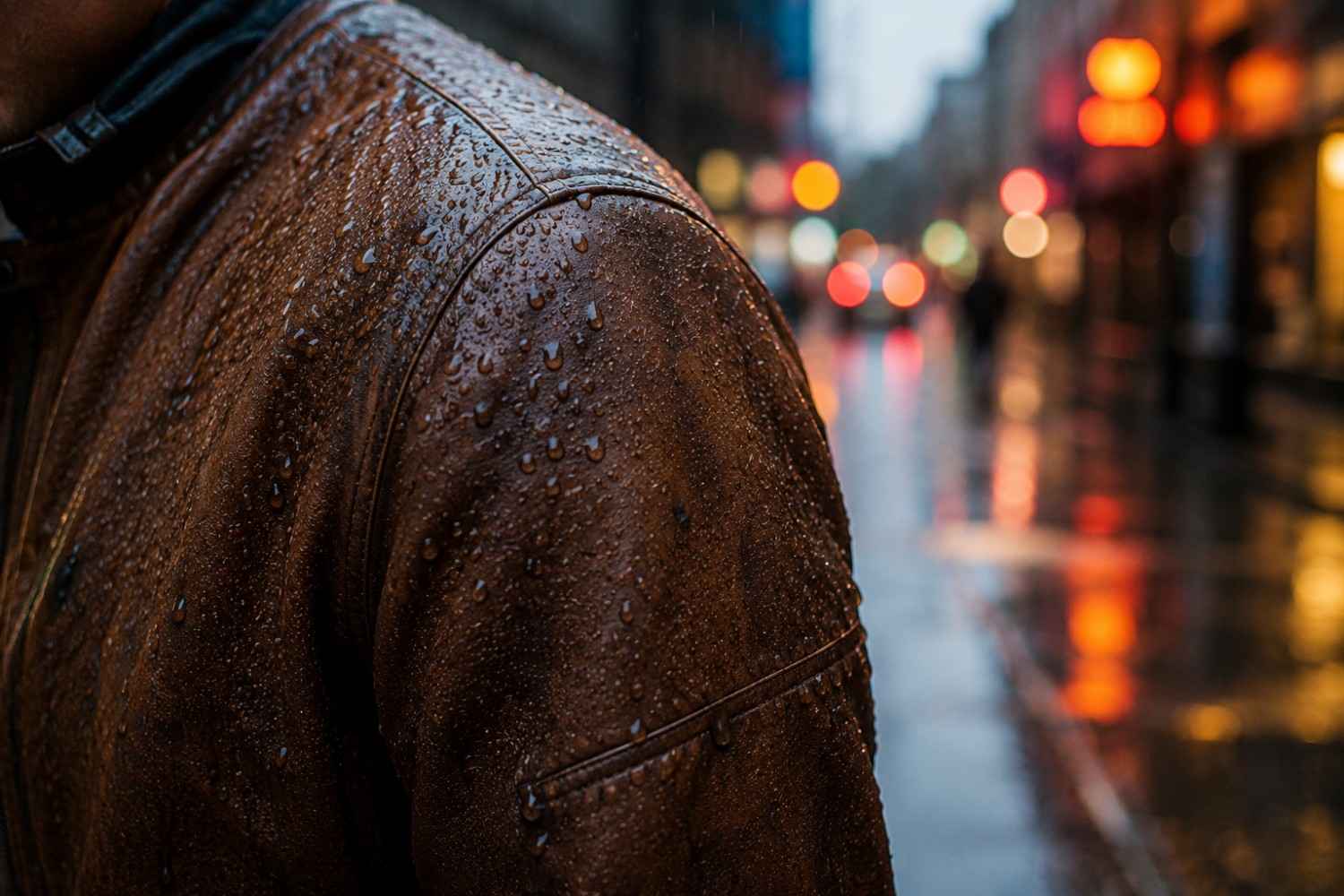
A leather jacket is more than just a quick fashion statement—it is a serious investment. Whether you scored a vintage bomber from a thrift store or dropped hard-earned cash on a premium lambskin piece, getting caught in an unexpected downpour can trigger instant panic. You immediately start wondering if the texture is ruined, if it will shrink, or if it is going to smell like mold. The good news is that your favorite outerwear is likely going to survive. Leather is a remarkably durable natural material, but it does have a complicated relationship with water. If you act fast and follow the right recovery steps, you can easily protect it from permanent damage.
Why Water Is the Ultimate Enemy of Premium Leather
To understand how to save your jacket, you first need to understand what happens beneath the surface when it gets wet. Leather is made from animal hide, which is naturally packed with dense protein fibers and essential oils. These oils are the secret sauce that keeps the material soft, flexible, and strong. When rain drenches your jacket, water molecules push deep into these fibers and temporarily bind with the oils.
The real damage does not actually happen while the jacket is wet; it happens during the drying process. As water evaporates from the leather, it pulls those natural oils out into the air along with it. Once the moisture is completely gone, the protein fibers are left dry, unprotected, and tightly bound together. This leads to a nightmare scenario for any leather owner: stiffness, deep wrinkles, surface cracking, and even permanent shrinkage. Furthermore, if you leave a damp jacket trapped in a dark, poorly ventilated closet, you create the perfect breeding ground for mold and mildew.
Assessing the Damage: How Wet Is Too Wet?
Not every encounter with rain requires a full-scale rescue mission. The level of panic you should have depends entirely on how much water your jacket absorbed before you made it indoors.
Dealing with Light Rain and Minor Drizzle
If you only faced a quick walk from your car to the front door under a light drizzle, your jacket will be completely fine. A few stray raindrops on the surface are not going to penetrate deep into the hide. In this scenario, you do not need to do any heavy lifting or intense conditioning. A quick wipe down and some natural airflow will easily do the trick.
Managing Moderate Rain and Damp Textures
This happens when you get caught in a steady rain for ten to twenty minutes without an umbrella. The jacket looks visibly darker, feels heavy, and the texture is damp to the touch. The water has started traveling past the surface guard and is actively working its way into the fibers. You need to intervene here with a proper drying routine to make sure the leather does not dry out stiff.
The Heavy Rain and Total Saturation Worst-Case Scenario
If you got caught in a massive summer storm or a relentless downpour where water soaked straight through the leather and into the inner fabric lining, you are dealing with total saturation. The jacket is heavy, dripping, and highly vulnerable. This is where you must follow every single step of a recovery guide perfectly, because improper drying at this stage will absolutely ruin the fit and flexibility of the leather permanently.
The Step-by-Step Rain Recovery Guide for Your Leather Jacket
If your jacket is currently damp or completely soaked, do not panic. Take a deep breath, lay out a couple of towels, and follow this foolproof sequence immediately.
Step 1: Empty Your Pockets and Shake It Out
Before you touch a single towel, empty every single pocket. Remove your phone, keys, wallet, and loose change. Heavy items left inside wet pockets will stretch out the damp leather, leaving you with ugly, sagging bulges that never snap back into shape. Once the pockets are completely empty, hold the jacket by the collar and give it a gentle shake over the tub or sink to get rid of the loose, pooling water sitting on the surface.
Step 2: Pat the Hide Dry Using a Microfiber Cloth
Grab a clean, dry microfiber cloth or a highly absorbent cotton towel. Lay the jacket flat on a clean surface and gently pat the exterior to blot up the moisture.
Why You Must Avoid Aggressive Scrubbing
Never rub or scrub the leather aggressively with the towel. Wet leather has open pores and a softened surface finish, meaning rough friction can easily scrape away the dye, scratch the grain, or leave permanent discoloration marks. Focus your gentle patting on the areas where water naturally pools, such as around the seams, the heavy collar folds, the cuffs, and the zipper tracks.
Step 3: Choose the Right Hanger to Maintain the Shape
Never, under any circumstances, hang a wet leather jacket on a thin, flimsy wire hanger. The immense weight of the wet leather pressing down on a thin wire will create ugly puckers and permanent dents in the shoulders. Instead, opt for a wide, padded hanger or a thick wooden suit hanger that mimics the natural curve of human shoulders. This ensures the jacket retains its structural integrity as it dries.
Step 4: Air Dry the Jacket Naturally in a Well-Ventilated Space
Hang the jacket up in a room that gets plenty of natural, moving airflow. A hallway with a draft or a room with a ceiling fan running on low is absolute perfection.
The Dangerous Mistakes of Forced Heat Drying
You must resist the temptation to speed up the process. Never place your wet jacket near a radiator, a fireplace, a heat vent, or under direct sunlight. Absolutely never use a handheld hair dryer on it. Artificial heat cooks the leather fibers, causing them to shrink instantly and crack beyond repair. Let nature do the work, even if it takes anywhere from 24 to 48 hours to dry completely.
Step 5: Massaging the Hide with Premium Leather Conditioner
Once the jacket is completely dry to the touch, it is going to feel slightly stiffer than usual because it lost its natural oils. This is the moment to bring it back to life. Apply a nickel-sized amount of high-quality leather conditioner to a soft cloth and gently massage it into the jacket using smooth, circular motions. The conditioner will sink deep into the dry fibers, replacing the lost oils and instantly restoring that buttery-soft, flexible feel. Let the conditioner absorb for a couple of hours, then take a clean cloth and buff away any leftover residue.
What Are the Most Common Mistakes That Can Ruin Wet Leather?
When people are in a rush to save their favorite clothes, they often make critical mistakes that end up doing way more damage than the actual rain ever could.
The Disastrous Impact of Machine Washers and Dryers
Throwing a wet leather jacket into a tumble dryer is a death sentence for the garment. The chaotic spinning, friction, and intense heat will warp the panels, shrink the fit by multiple sizes, and shatter the surface texture. Leather should never see the inside of a washing machine or dryer.
The Hidden Danger of Storing a Semi-Damp Jacket Too Early
If the outside of your jacket feels dry but the inner lining is still a tiny bit damp, do not put it back in your wardrobe. Trapping even a tiny amount of moisture inside a dark, enclosed closet creates a perfect microclimate for green mold spores to grow. Make sure it is 100% dry inside and out before storing it.
Proactive Prevention: How to Protect Your Jacket from Future Storms
The easiest way to deal with rain damage is to prevent water from soaking into the leather in the first place. With a little bit of prep work, you can make your jacket highly water-resistant.
The Magic of Using a High-Quality Water-Repellent Spray
Invest in a premium leather protector spray that contains a fluoropolymer formula. When sprayed onto the jacket, it creates an invisible, breathable barrier that forces water to bead up and roll right off the surface instead of soaking in. Make sure to test a small amount on a hidden area first to ensure it does not alter the color, and reapply it every few months.
How to Store Your Outerwear Correctly During the Rainy Season
Store your leather pieces in a cool, dry closet away from any humidity. Avoid using cheap plastic garment bags because they trap stale air and moisture inside. If you want to protect your jacket from dust, use a breathable fabric or cotton garment bag instead.
Frequently Asked Questions About Leather and Rain
Can I wear a genuine suede jacket out in the rain?
No, you should strictly avoid wearing suede in wet weather. Suede has an open, napped surface texture that is far more sensitive than standard smooth leather. Water will instantly stain, flatten, and ruin the velvet-like nap of suede.
How do I fix light water spots left behind after the jacket dries?
If your jacket dries with uneven water stains, take a slightly damp, clean cloth (using distilled water) and gently wipe the entire panel from seam to seam. This redistributes the moisture evenly. Allow it to air dry naturally and follow up immediately with a leather conditioner.
When should I give up and take my jacket to a professional cleaner?
If your jacket has been completely submerged in water for hours, if it has developed a strong, musty mold smell, or if the leather has become as stiff as cardboard, do not try to fix it at home. Take it to a professional leather care specialist who has the advanced tools to safely restore the hide.
Conclusion
Getting caught in a sudden rainstorm does not mean your beloved leather jacket is destined for the trash can. As long as you stay calm, avoid the temptation of using fast heat sources like hair dryers, and allow the material to air dry slowly on a proper hanger, it will bounce back beautifully. Think of conditioning your leather after a storm as a mandatory spa day that replaces the vital oils washed away by the rain. By taking these smart, active steps and investing a little time into routine maintenance, your leather jacket will stay incredibly soft, stylish, and ready for many more adventures for decades to come.


 No products in the cart.